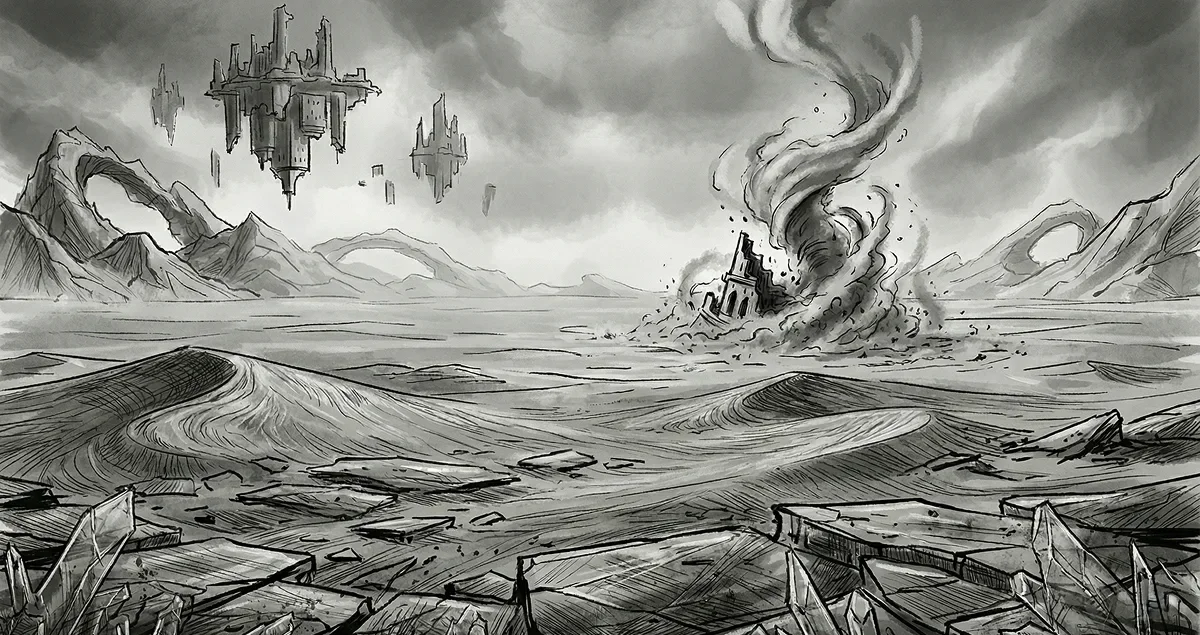
THE FIRST STROKE
The Pact with the Ink
A frustrated painter meets Mecenas, an influential mentor who promises transcendence. Obsession takes root, and the first colors of his real life begin to fade.
Melancholy, Decadence, and the Death of Art
A dark journey of an amateur artist who sold his sanity in exchange for the sublime. Under the tutelage of the enigmatic Mecenas, the Protagonist reached the apex of recognition, only to watch his relationships slip through his fingers like watered-down ink. Now, trapped in a posthumous state of depression, he wanders through a nearly monochrome world. Color, once his life, surfaces only as rare flashes of lost emotions and memories. A posthumous search to understand how his greatest passion became his own ruin.
A frustrated painter meets Mecenas, an influential mentor who promises transcendence. Obsession takes root, and the first colors of his real life begin to fade.
Worldwide acclaim is achieved, yet the price is absolute isolation. Partner, friends, and family are left behind. The canvas is flawless, but the artist's soul is hollow.
Harsh critiques and disqualification shatter his ego. Bereft of fame and with no one by his side, the artist succumbs to depression and awakens in a Nankin purgatory.
A worn soul reflecting his decadent art. His physical form deteriorates as depression consumes him, seeking the truth behind his manipulation.
The enigmatic and influential patron. He promised greatness but demanded absolute sacrifices, oscillating between inspiring savior and sociopathic leech.
Echoes of those who once loved him, pushed away by his obsession. In the monochrome purgatory, they stand as silent shadows judging his abandonment.
The only color remaining in this universe of ink. Chromatic fragments representing real memories, unfeigned emotions, and the sanity he desperately tries to reclaim.

A claustrophobic room where windows show only static. The floor is covered in torn canvases whispering the critiques that drove him to artistic suicide.
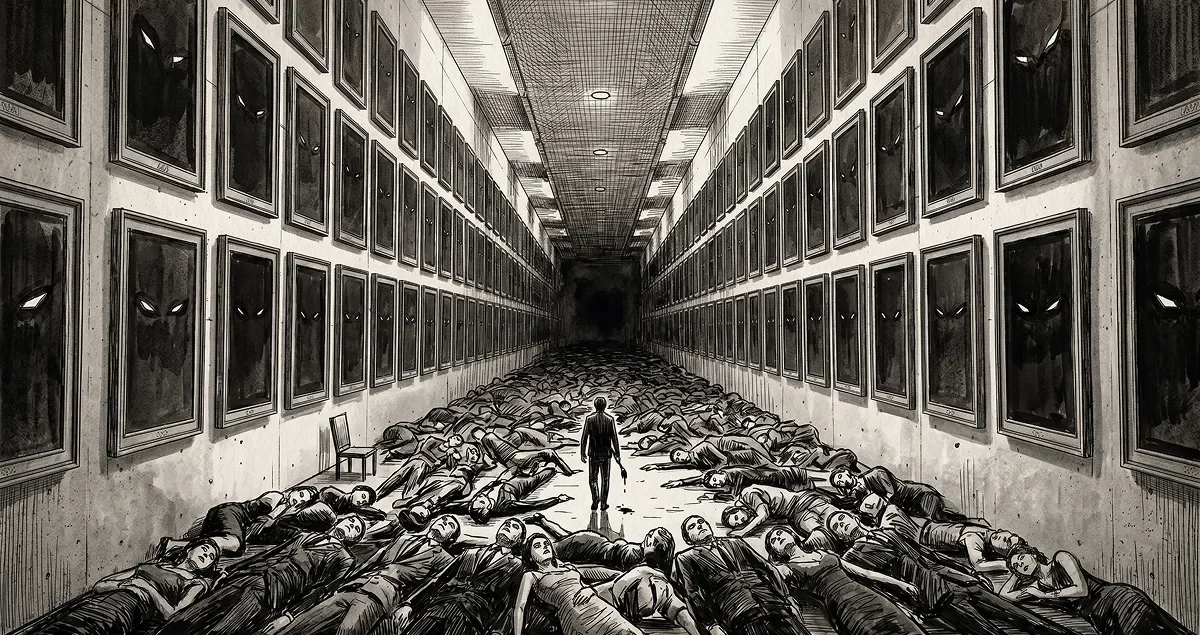
Infinite corridors lined with faceless paintings. The gaze of high society weighs upon the protagonist, demanding ever more blood for the next exhibition.
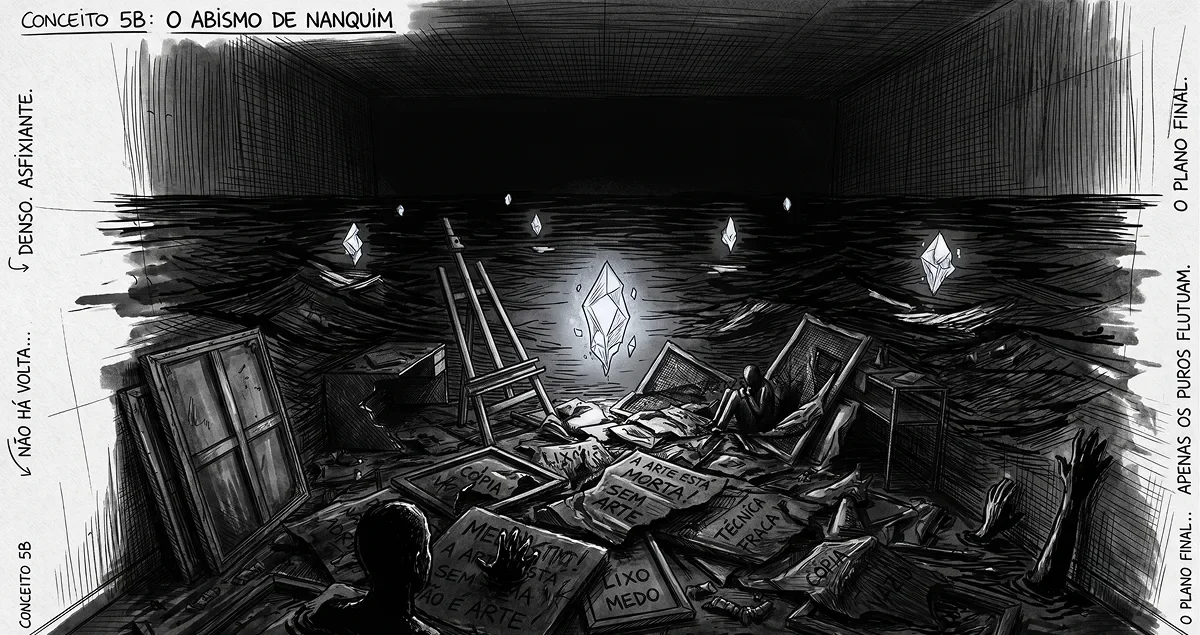
A literal ocean of black ink where those who lose their purpose sink. Dense and suffocating, where only Pure Flashes manage to float.
He was just another amateur with graphite-stained hands and a heart full of unrequited passion for the galleries. When Mecenas appeared, he did not seem like a manipulator, but a prophet. His words did not merely praise technique; they unlocked doors in the protagonist's mind he didn't even know were shut.
The transition was subtle. The first works under Mecenas's tutelage overflowed with transcendental beauty—a depth that frightened even the creator himself. Notoriety soon followed, and with it, the poison of applause. Yet Mecenas demanded focus. "True art," he would say, "does not share space with the mediocrity of human affection."
The climb to the apex was a march over the corpses of his personal relationships. The protagonist stopped answering calls. His partner left, taking with her the last anchor tying him to reality. Family became unwanted background noise. He isolated himself in a studio smelling of turpentine and despair, believing solitude was the martyrdom required for greatness.
"I did not paint a masterpiece. I diluted my own soul in solvent and spread it across the canvas. And when the world applauded, I smiled, unaware there was no one left inside."
— Notes on the Back of the Torn Canvas
And then, after the peak, the fall. The art world, so quick to raise gods, is even quicker to devour them. Disqualifications, hollow critiques, and Mecenas's perpetual dissatisfaction broke the artist. Success gave way to clinical depression, and color literally began to vanish from his sight.
Biological death was not the end of pain. After dying, the protagonist awakens in a purgatory of pure Nankin aesthetics. There are no warm textures—only brutal contrasts of white, black, and ash. He walks like a ghost through his own posthumous exhibition, trying to decipher the anatomy of his fall.
In this realm, the only traces of color are the 'Pure Flashes'. When he finds a drop of blue, he remembers the sea where he was once happy; a stroke of yellow recalls the smile he abandoned. Now, his mission is not to paint the perfect canvas, but to navigate Mecenas's dark ocean of ink to uncover the truth: Was he a misunderstood genius, or just another puppet whose strings were cut once he was no longer useful?